


Blog Post
The Legacy Of The HepG2 Cell Line: Advancing Liver Research For 40 Years
15
Dec
Dec
Researchers have been using HepG2 cells to study the liver for over forty years. This demonstrates the importance of this tissue. The cell line changed the game entirely. This cell culture has made significant contributions to medicine, biology, and drug development. It has supported research in many unique ways.
The HepG2 cell line is highly trusted because it came from a single cell. Its reliability has greatly benefited liver studies. Many researchers use HepG2 cells to test new treatments, study liver diseases, and check the safety of new drugs. Look at various inventions in this field, and you will know how much they have changed the research.
However, their impact does not stop there. Doctors and researchers now use HepG2 cells as a key benchmark to measure health in the real world. Their story is about curiosity and determination. It also shows the ingenuity that helps medicine move forward. Many decades have passed, but these cells still play an essential role. Studies using them continue to support discoveries. They also help improve human health.
Let’s take a closer look at how the legacy of HepG2 continues to inspire liver research worldwide.
Beginning of a Powerful Research Tool
HepG2 cells are derived from a sample of a human liver tumor. Since they emerged, they have redefined how individuals approach studying the liver. Initially, when scientists examined them, they found they behaved much like liver cells. These cells processed nutrients, produced essential proteins, and grew remarkably well in the lab.
This was a game-changer. No longer did researchers have to hope for the best when obtaining fresh liver tissue, which invariably raised ethical concerns. They now had a dependable and consistent means of investigating the liver’s function.
Over time, the HepG2 cell model became the preferred option for liver studies. In fact, you can still grow them in the future and still obtain dependable results. That is how important it is in studies that examine how the liver handles drugs, toxins, and disease. Scientists can see living images of liver metabolism, including active enzymes and even cellular damage.
The best part?
Because the results were stable, the researchers trusted their observations. This consistency has driven medical research forward, enabling labs worldwide to better understand and protect liver health.

Importance of HepG2 Cells in Modern Science
HepG2 cells can produce many different enzymes, just as those present in a normal liver. These would include enzymes that break down fats, process sugar, and take up foreign materials such as medicines and chemicals. As a result, it can be said that HepG2 cells are very similar to actual liver cells. They assist scientists in learning more about liver function and the response it produces toward various materials within the body.
Scientists can test HepG2 cells with a drug, nutrient, or compound in a controlled lab setting. The cells are grown under conditions that simulate conditions inside a human body. By doing so, scientists can better interpret actual reactions because they have been set up to respond naturally.
Scientists sometimes repeat experiments several times to ensure consistent findings. By repeating experiments, they can eliminate some faults. Obtaining fault-free findings is very necessary. It helps scientists develop strong theories and also aids in understanding various liver functions.
HepG2 cells are helpful for research on liver diseases. Scientists can use these cells to analyze how a healthy liver might develop complications such as fat accumulation, inflammation, or even very early-stage cancer. Scientists can also identify very early warning indicators of harm to these cells and ways to minimize them.
Because liver cells are susceptible to many factors, cell lines like HepG2 are useful for predicting how a drug or compound might behave when it encounters a liver cell. Verifying safety ahead of time can help scientists avoid problems down the road.
HepG2 ATCC and Its Role in Standardization
The HepG2 ATCC cell line is highly popular for its reliability and high quality. Many scientists consider it a reference. ATCC collaborates with research labs worldwide and verifies the authenticity and purity of the materials it distributes. All this helps scientists obtain clean, pure cells. Additionally, it helps them get exactly what they ordered.
Scientists receive healthy and contaminant-free HepG2 cells from ATCC. Scientists are assured as they start an experiment. Moreover, scientists are aware that everyone begins with the same cells. That makes it easy for scientists to make comparisons.
Science requires consistency. Cultures may develop changes. Cultures can undergo changes when cells are cultured under varying conditions. A small difference within cells may result in a large difference within data. Scientists eliminate these difficulties by using HepG2 cells from ATCC. ATCC ensures that there are no unexpected changes within the cells. Researchers will experience fewer unexpected changes within their data.
The HepG2 cell line from ATCC is beneficial for testing, pharmacology, and genetics. Different researchers at various institutions know that they are working with the same model. Because of this, it becomes relatively easy for them to integrate multiple pieces of information.
HepG2 ATCC cells make global collaboration easy. Scientists can replicate experiments conducted elsewhere and confirm whether they get similar results. This significantly advances medical and biological research. It also enables scientists to identify discrepancies and improve how they analyze data.
Science demands trust and consistency. These factors improve drug testing, environmental research, and genetic research. ATCC contributes toward these developments with high-quality research-grade HepG2 cells.
How HepG2 Cell Culture Supports Discovery
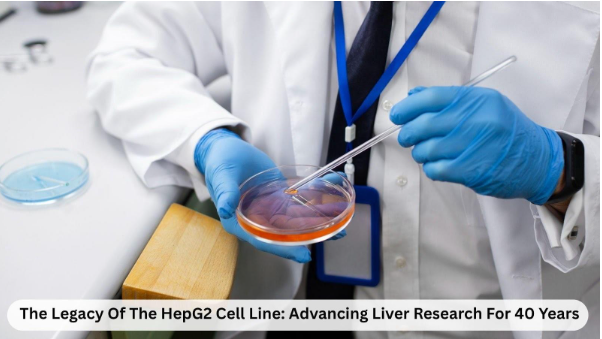
HepG2 cell culture provides conditions that replicate liver function in vitro. Cells grow and behave like normal liver cells under controlled conditions. Scientists use this model to study the effects of drugs, nutrients, and toxins on the liver.
The researcher grows HepG2 cells under conditions that mimic those found inside the human body. The investigators control everything, including temperature, nutritional supply, pH, and so on.
When properly cared for, cells remain healthy and grow steadily. The treated cells continue dividing for long periods. This consistency allows the repetition of studies and the conduct of a steady stream of long-term research.
By culturing HepG2 cells, one can observe the liver’s response to new drugs or toxins. Such studies that researchers establish nontoxic dosage levels of drugs, look for evidence of early side effects, and explore ways to improve treatment responses.

Advancing Drug Development Through HepG2 Cell Studies
One of the major sectors in which HepG2 cells have made a lasting impact is drug development. Any medicine must undergo several tests before being administered to patients. The liver is the very first organ to come into contact with any drug that may enter the body. It takes those compounds and processes them. Your body will either use or throw away those things.
By conducting tests on HepG2 cells, it is possible to study the initial signs of liver toxicity that drug candidates may induce. This saves time and reduces risk in clinical trials by helping design the drug more safely before it is tested on humans.
Aside from safe testing, HepG2 cells measure the speed at which our liver metabolizes a compound. Thus, knowing this, the doctor can determine the intensity and frequency of the patient’s condition. The method has improved in both quality and reliability in modern medicine.
Supporting Toxicology and Environmental Studies
HepG2 cells help in many ways. Toxicology, medicine, and the environment were among the fields where these cells were used. Since this cell behaves like a human liver cell, it helps scientists understand how the liver responds to different substances; therefore, HepG2 is used by researchers to assess safety.
The researchers use HepG2 cells to detect toxic chemicals. They test food, water, and industrial waste chemicals. The cells will start to show visible responses once they come into contact with a chemical. If the cells are stressed or damaged, it may indicate that the chemical is hazardous to the liver. A toxicant chemical that is harmful to the liver is considered “hepatotoxic.” Such trials help researchers identify which chemicals warrant closer observation.
Such research plays a vital role in protecting public health by helping defend against hazardous chemicals. Scientific studies on how cells react help establish safety regulations that dictate the use of such chemicals and the limitation or removal of others. Regulatory agencies use this information to keep communities safe.
HepG2 cells are fundamental to this process, as they behave in a consistent, human-like manner. Their stability helps make test results more transparent and more distinct, thereby earning greater trust in the results. This means that decisions made from such tests are more accurate.
The cells also help scientists compare results from different labs. Because the HepG2 cells are so similar, many researchers can study the same chemicals and retrieve similar results. This consistency makes the findings stronger.
For all these reasons, HepG2 cells serve as a crucial link between in vitro studies and real-life safety decisions. They are used to protect human health, understand chemical hazards, and help maintain a safer world for all of us.
Versatility of HepG2 Cell Applications.
The long-term applications of HepG2 cells have been versatile across numerous research studies. Currently, these are found to be useful in nutrition, genetics studies, and cancer biology.
Researchers studying nutrition aim to understand how vitamins, minerals, and other nutrients influence liver metabolism using these cells. This helps to draw better guidelines and supplements for nutrition.
HepG2 cells are indispensable in cancer research for finding treatments and studying liver tumors. Liver cancer cells exhibit characteristics of a subset of liver cancers; thus, they can serve as a model for developing new therapies.
Other biomedical studies involve flexibility and dependability, among many different types. Researchers widely use HepG2 cells because they provide a consistent, reliable platform for research.
HepG2 cells support steady progress in science. They help researchers test ideas with confidence and give precise results and strong guidance. They also open doors to discoveries. Their role continues to grow as research expands. They remain a trusted tool for many future studies.

Science Behind HepG2 Cell Function
The HepG2 cells remain stable. The cells maintain their form. They also maintain their genome and behave like authentic liver cells. The cells possess liver enzymes.
These enzymes have various roles and break down fats and carbs. These enzymes remove toxins and produce proteins. Researchers use these cells to analyze liver responses to drugs and alcohol.
Scientists cultivate HepG2 cells in controlled environments. They introduce a new compound into the cells. Scientists observe reactions among the enzymes. Some enzymes work more effectively in the presence of the compound inside cells. This implies that the liver needs to eliminate the compound more quickly. Other times, these enzymes will slow down. It means that the compound interferes with liver functions.
All these changes help scientists understand liver responses. They determine whether a compound remains safe. Additionally, they discover side effects.
HepG2 cells help scientists examine genes. Scientists expose this cell culture to a drug, a nutrient, and a toxin. Genes are then triggered. All these reactions demonstrate liver responses within the body.
All people have different genes. Their genes determine reactions to medicine. Some people have good reactions. Some people do not. Researchers examine these reactions. They discover some similarities.
It aids personalized medicine. Medical practitioners rely on genetic information to make better treatment decisions. Outcomes are better. It helps every patient receive the best treatment.
Final Words
HepG2 cells are making their mark, one plate at a time. For about 4 decades, researchers have used these tools for liver research, drug discovery, and safety assessment. They have made a significant mark in the medical and environmental fields over the past few decades. And it continues to happen from one generation to the next.
HepG2 cell culture will remain an essential tool as research progresses. Since it is reliable and precise, future findings will be based on it. The journey of HepG2 cells is far from over. With their continued use, we will be able to protect human health and improve the quality of life for decades to come.
