


Uncategorized
Yawning: More Than Just a Sign of Sleepiness
25
Aug
Aug
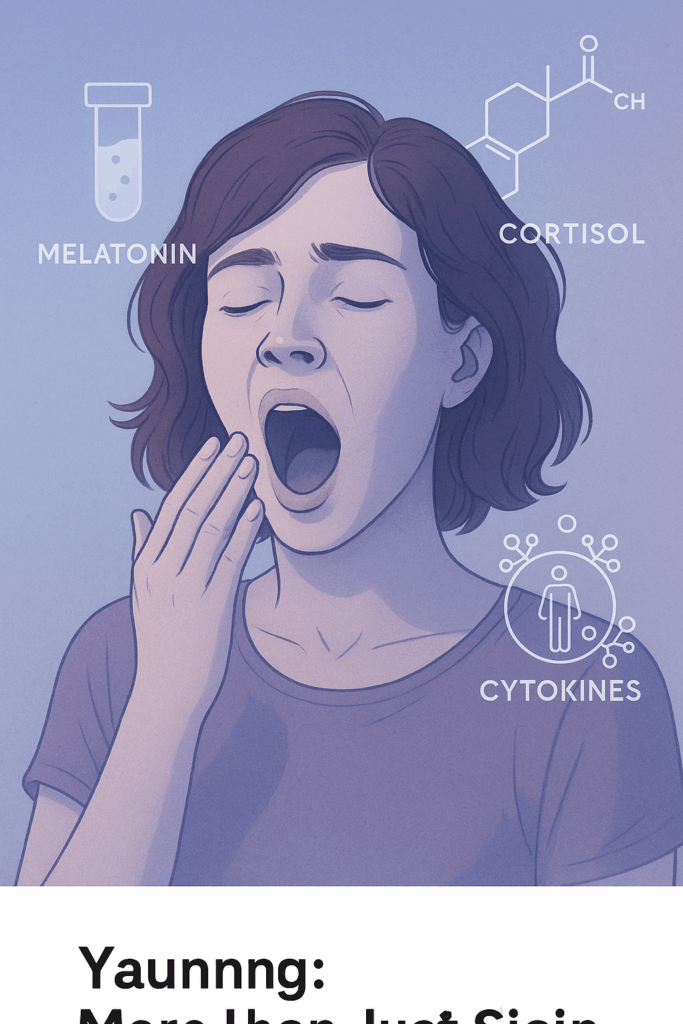
You know the feeling when you see someone yawn and suddenly you have to yawn too. We all do it, and according to sleep researcher Colin Espie, it’s much more interesting than just a sign of boredom. His research suggests that we should welcome our yawns because it’s an important, age-old reflex. Yawning cools down our brain and helps our body transition from wakefulness to sleep. Think of it as your body’s natural signal that it’s time to rest.
This realization is especially helpful for anyone who has tossed and turned at night. Many people have trouble falling asleep because they no longer recognize their body’s natural sleep signals. They get the frustrating feeling of being “tired but exhilarated” and look at the clock instead of listening to their body.
A further factor of sleep is cortisol, or as it’s also called, the stress hormone. If this is elevated it can suppress deep sleep, leaving you awake at times you should be sleeping. Additionally, a feedback loop of poor sleep and high cortisol can play havoc on your normal circadian rhythms.
In contrast, good sleepers usually go to bed when they feel these natural signals, such as heavy eyes or the urge to yawn.
Normally, you yawn about 5 to 10 times per day. It’s a normal reflex that can exhibit boredom, empathy, and sleepiness. If the yawning becomes obtrusive to normal daily life, it might be possible to start a melatonin treatment regimen to improve overall sleep dynamics.
A proposed therapy with the friendly-sounding name CYRaT (Conditioned Yawn Reflex as Therapy) aims to harness the contagious power of yawning. The idea is wonderfully simple and something that anyone can try. When you’re lying in bed and your mind is racing, you can deliberately induce a yawn. You could close your eyes and vividly imagine someone else letting out a big, deep yawn, or even think of a sleepy kitten. Because our brains are so well attuned to it, just thinking about a yawn can set off a real, unstoppable chain reaction.
Even if it seems silly at first, you can try to “fake” a yawn by opening your mouth wide and inhaling deeply. This often triggers your body to produce a real yawn. The really cool part is what happens next. A real, deep yawn is a powerful physical event that forces you to breathe deeply and tense your facial muscles. For a moment, it takes over and this physical sensation is often strong enough to drown out all the mental noise and chatter. It’s hard to think about your to-do list during a satisfying yawn; it’s like hitting a mini-reset button.
While complete cessation of sleep can kill you (it will take several days of not sleeping), poor sleep can also be harmful. Non-REM sleep can promote the production of several inflammatory cytokines like IL-1, IL-6, and Tumor Necrosis alpha. These pro-inflammatory cytokines can increase the risk of chronic diseases.
Each yawn creates a real sense of sleepiness that’s hard to ignore. It’s a way of gently reminding your body, “Hey, this is what it feels like when you’re tired.” As one yawn leads to another, you create a gentle biofeedback loop that teaches your body and mind to let go and actively restore the natural, cozy connection between falling asleep and sleeping through the night effortlessly.
