


Blog Post
The Role Of Tissue Culture In Modern Biotechnology
05
Dec
Dec
Today’s biotechnology facilitates the growth of new plants, the production of better medicines, and an understanding of the workings of living organisms. It establishes links between science and agriculture that were once difficult. Tissue culture, a simple yet powerful technique, is an important field of science.
Scientists and farmers can create disease-free plants through tissue culture. They can also study living cells to produce new varieties with desirable traits. The operation is accurate, dependable, and popular among researchers and industry professionals.
In fact, it now aids in speeding up the growth of certain crops, preserving rare species, and developing new medicines. Tissue culture remains at the heart of biotechnology as it expands from ideas to industries.
Let’s explore what tissue culture is, how it works, and why it holds such an important place in the future of modern biotechnology.
Understanding Tissue Culture
Before we get into the tissue culture process, it is important to understand what tissue culture and its applications in biotechnology is. Tissue culture refers to the process of growing tissue from a plant or animal in a controlled and artificial environment. This is achieved by placing them in a special container that supplies the right mix of nutrients, hormones, and energy pulses needed for growth. A clean and sterile environment will prevent contamination from bacteria, fungi, or other unwanted organisms.
At controlled sites, scientists can influence the growth of plants and animals by controlling factors such as temperature, light, and humidity. Because scientists have complete control over the environment in which cells grow, they can study how cells divide and develop, as well as how they respond to different substances. They are capable of testing how cells react to environmental stress or chemicals without impacting an entire organism.
Tissue culture is an extremely useful technique, as it allows for the exact replication of plants and the preservation of their unique features. Farmers and researchers can quickly multiply disease-free plants, and scientists can study genetic behaviour more clearly. Uniformity of all samples is essential in cell and tissue culture, and this method assures just that.
In biotechnology, tissue culture is the basis of many innovations. It helps in improving crops, medical research, and genetic engineering. Tissue culture, which utilises various media to maintain cell viability, facilitates the study of life processes at the cellular level. Tissue culture helps create a pure sample that can yield reliable results. This laboratory process presents significant opportunities for both agriculture and medicine.
How Tissue Culture Works
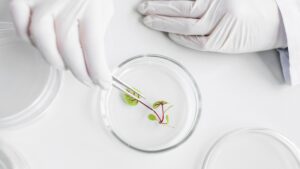
The first step in tissue culture is to select a small part of the plant or animal, known as an explant. The plant part used in the experiment can be a leaf, stem, root tip, or a cell, etc. After selection, the explant must be thoroughly cleaned of any dust, microbes, or unwanted debris. This stage is crucial because even a slight hint of contamination can compromise the entire culture. After the explant is cleaned, it is placed in a nutrient-rich growth medium in a glass or plastic sterile container.
The jelly-like substance serves as the medium that provides everything cells require to grow. A carefully balanced mix of sugars for energy, vitamins and minerals for nutrition, and plant hormones that regulate how the cells develop.
These two hormones regulate whether cells develop into roots, shoots, or leaves. The culture is placed in a growing room where the temperature, light, and humidity are maintained at optimal levels. As time passes, the cells divide to form small clusters of new tissue.
These clumps, called callus, will continue to grow until they develop into either small plantlets or organised tissues, depending on the type of culture. To achieve the best results, constant monitoring is crucial for the process.
Also, tissue culture is an effective technique for culturing tissues. This technique may seem simple, but it is powerful and reliable. It allows scientists total control over the growing environment, enabling them to study development in detail and create clean, identical samples. The capacity to manage the environment within a flask is what makes cell and tissue culture so crucial for modern biotechnologists and the scientific sector.
Importance Of Tissue Culture In Plants
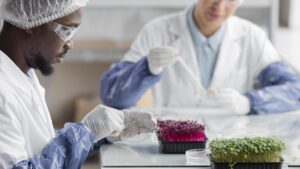
Tissue culture in plants has revolutionised modern agriculture and horticulture. Farmers, scientists, and growers will efficiently produce high-quality plants in large numbers that are strong, healthy, and disease-free.
Tissue culture is arguably more efficient than traditional farming, which uses a lot of seeds and is dependent on seasons. This will help growers meet market needs easily and ensure an uninterrupted supply of high-quality crops.
This technique enables the production of identical plants, commonly referred to as clones, which originate from a single parent plant. The cloned plants have similar characteristics, such as colour, shape, taste, and growth rate, which are ideal for commercial farming.
Growing the cultures in such an environment also reduces the risk of spreading plant diseases. Farmers can spend less on pesticides and invest that money in producing healthy, high-yield crops.
Plant tissue culture enables us to grow many plants in various soils and climates. Plants that tend to grow in tropical regions can now be grown in laboratories or greenhouses anywhere in the world. With this innovation, food can be produced in soil that’s unsuitable or in bad climates. Being able to reproduce rare plant species without disturbing their natural habitat helps keep them from extinction.
As a result of this technique, many new crop varieties have been developed. These plants grow more quickly, yield higher total production, and are more resistant to pests and diseases. Due to these advantages of tissue culture, it has been one of the most significant innovations in agriculture, ensuring sustainable farming and food security for future generations.
Types Of Tissue Culture Techniques
Biotechnology utilises various tissue culture techniques that serve multiple purposes and have distinct applications. Researchers can now study cells in depth and produce healthy plants and biological applications via these methods. Some techniques focus on the growth of a single cell, while others can be used to develop whole plants or specific organs under controlled conditions.
One of the most widely used techniques is micropropagation. This technique entails cultivating a large number of similar plants from a very small piece of the parent plant. Each time you clone a plant, you create a new plant that is a perfect genetic replica of the original. Micropropagation is the preferred propagation technique for ornamental plants, fruits, and crops due to the uniformity and health of the plants.
Another important method is callus culture. During the process, the explant cells proliferate to form a soft, unorganized mass known as a callus. Besides being able to use these shoots for vegetative propagation, important traits can also be induced in the callus tissues. Callus culture for genetic studies and plant breeding experiments provides a means of gaining access to cells, making it much easier.
Cells that are suspended in culture are grown in a liquid medium instead of a solid medium. The cells remain suspended in the liquid and are gently shaken to maintain a uniform distribution. This technique is used to analyse the behaviour of a cell, produce valuable compounds, and scale biological material for research or commercial applications.
Another technique is organ culture, which refers to the culture of parts, such as roots, shoots, and flower buds, under aseptic conditions. It helps scientists understand how each part behaves and grows in response to nutrients and hormones.
Each of these tissue culture techniques plays a crucial role in modern biotechnology. They will assist in improving agriculture, medicine, and industry by providing tools to study cells better and enhance plant growth. And further strengthen initiatives to develop scientific solutions to real-world challenges.
Tissue Culture In Biotechnology Research
Tissue culture is widely used in biotechnology for several studies. Scientists can use it to see how cells react to chemical or genetic changes. This is really helpful in the creation of new medicines.
Scientists can test the effects of a drug on live cells without using a whole animal or plant in laboratories using cell and tissue culture. This reduces time and cost. Furthermore, it guarantees improved accuracy of the results because the conditions can be kept similar.
Scientists study gene functionality through experiments on tissue culture. By studying cells in a controlled environment, we can determine which genes control growth, colour reaction, and disease resistance. By knowing how plants and organisms grow, we can make stronger ones.
Role Of Plant Tissue Culture In Food Security
Food security has emerged as one of the most pressing global challenges today. The world is soon going to witness a scarcity of food as the population continues to increase with each passing day.
However, the shortage of land and natural resources is not increasing at the same rate. Agriculture has become increasingly challenging due to difficult circumstances, including climate change, soil degradation, and pest infestations.
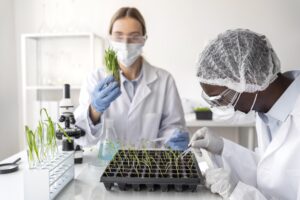
In challenging situations, plant tissue culture can serve as an adequate remedy. This capability enables scientists and farmers to produce crops quickly, safely, and in large quantities, even in areas with less than ideal growing conditions.
The process enables the easy development and multiplication of plants that can survive on limited water or extreme temperatures. Thus, it allows farmers to produce larger volumes of food on smaller pieces of land with less dependency on rain and chemicals.
The plant’s uniformity and strength make harvesting and processing easier in tissue culture. It helps produce better quality food by reducing the need for pesticides, as crops are more resistant to pests/diseases.
Tissue-cultured plants are superior in quality, with a long shelf life and excellent nutritional value compared to conventional ones. It helps curb post-harvest losses and reduce food waste, a significant global issue. Regions that rely on agriculture can adopt tissue culture to enhance crop variety, expand exports, and boost their economy.
By helping to boost yields, improve quality, and support sustainable farming, plant tissue culture can contribute to building food security. It helps supply food consistently and protects the environment. It also helps agriculture become more resilient and able to serve future generations.
Tissue Culture And Environmental Conservation
Tissue culture can also be used to prevent the depletion of natural resources. Many types of vegetation are being lost due to forest fires and climate change. These plants are saved through tissue culture by growing them in labs. When they become strong enough, they can be reported in nature.
This method also helps to restore the forests and natural ecosystems. Researchers are now able to multiply rare plants without having to source more from the wild. The process is safe, controlled, and sustainable.
This method in biotechnology promotes the use of technology for upkeeping the Earth. Tissue culture helps to create a cleaner and healthier environment through saving plants and restoring green cover.
Advantages Of Tissue Culture In Modern Biotechnology
In the contemporary era of biotechnology, tissue culture plays a vital role. It is a quick, clean, and reliable method for propagating plants and studying cells. You’ll always get similar results, and you can repeat anytime.
It also conserves space, as it is capable of growing multiple cultures in a compact laboratory. Unlike traditional methods, tissue culture does not rely on climate and soil conditions. This makes it possible to produce crops all year round.
Tissue culture minimises disease risk, as every culture is initiated from clean, disease-free material. Researchers study the effects of fungus on developing fungal-resistant crops.
The process also supports innovation. It helps scientists develop new plant varieties, examine genetic variations, and search for more efficient ways to utilise natural resources. It is one of the key drivers of progress in biotechnology.
The Future Of Tissue Culture
The future of tissue culture looks bright. As biotechnologies evolve, novel techniques and tools are enhancing the cultivation of cells and tissue culture. Growth monitoring is closely tied to the automation and digitisation of systems to minimise errors.
In agriculture, tissue culture will assist farmers in producing improved crops faster. In medicine, it could be a powerful technique to help repair tissues and grow organs. As research continues, the process will become more efficient and cheaper for widespread use.
Education will also be helped significantly by the expected tissue culture. Students learn how living cells work and how science can solve real-world problems. It connects learning with innovation, leading to discoveries.
Final Thought
Tissue culture is more than just a laboratory process. Modern biotechnology provides a broad foundation for many industries. Plants are essential for many reasons, including environmental sustainability, medical advancements, and food security.
When we understand the definition of tissue culture, it gives us a fair idea of nature. It shows how small cells can lead to big solutions. With the rise of biotechnologies, tissue culture will continue to shape the future of farming, healthcare, and environmental care.
As researchers discover new applications for plant tissue culture, refine these techniques, and further their understanding of cell and tissue culture, its impact will continue to grow even greater. There are endless possibilities, and the benefits continue for both people and the planet.
