


Blog Post
The Evolution of the Hand and Brain
24
Oct
Oct
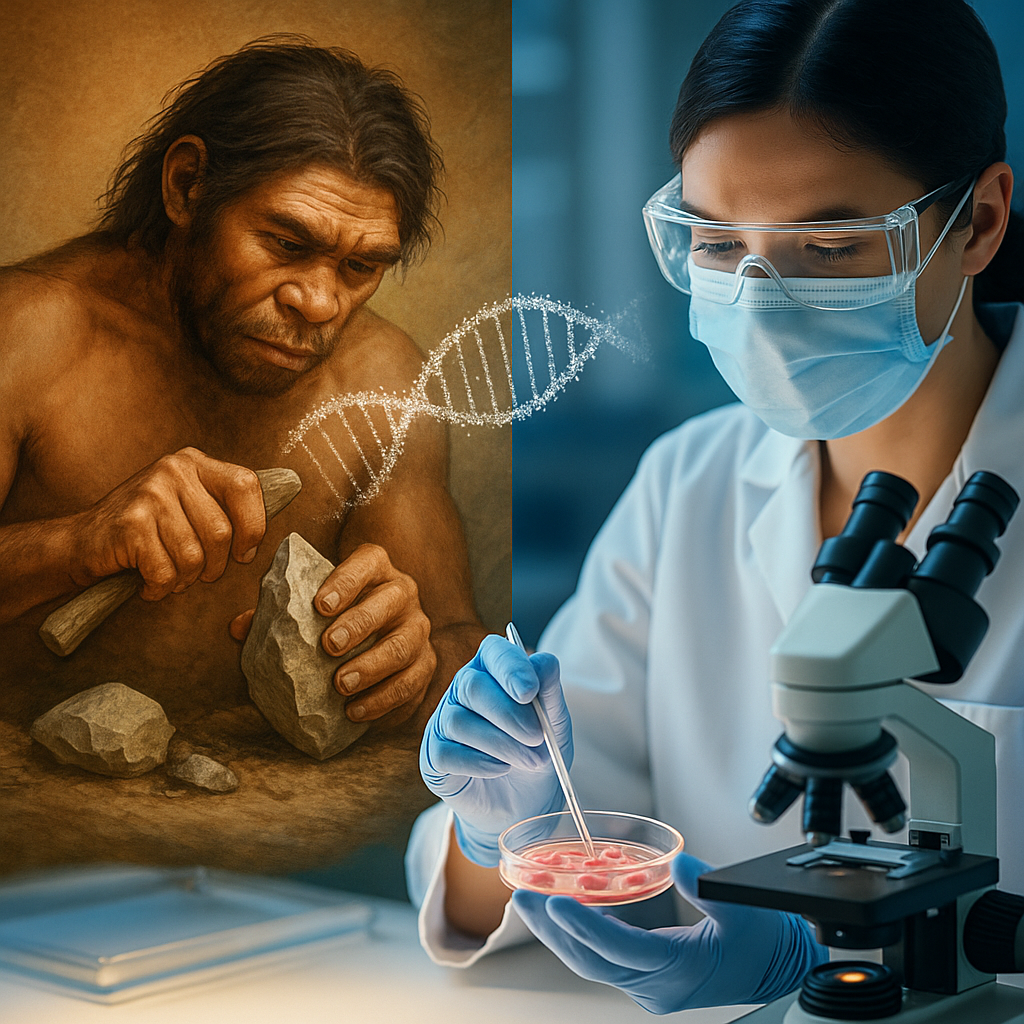
Have you ever thought about how incredible your hands are? Right now you might be holding a phone or scrolling with a mouse, but later you’ll be able to tie your shoes, cook a meal or paint a picture. Our hands are like personal superpowers, capable of both brute force and the finest precision. But have you ever wondered how we got them? A fascinating study gives us a nice clue, and it’s a story that involves our entire primate family tree. Imagine lining up nearly a hundred primate species and checking two simple things: how long their thumbs are compared to a finger, and how big their brains are. That’s the gist of this study. Across the primate family, species with longer thumbs (for their hand size) also have bigger brains. It looks like hand dexterity and brain power have been co-evolving for ages, rather than one being ahead of the other. Today, neuroscientists can explore this same link between dexterity and intelligence at the molecular level — using cytokine and neurotrophin assays to study how brain growth and motor control evolved together.”
Humans still have particularly long thumbs that help us do all sorts of precise tasks. But if you look at the larger pattern of primates, most of our fossil relatives don’t completely break the rules; they mostly fit right in. Only one, Australopithecus sediba, had a particularly long thumb, even when you take brain size into account. This shows us that a super-long thumb alone does not make a master manipulator; the brain also has to keep up. In labs today, researchers can actually recreate aspects of that “hand–brain” connection by growing human neural or muscle cells from stem cells — using specialized xeno-free media such as NutriStem™ hPSC XF and laminin-based coatings like iMatrix-511 to study how neurons and muscles coordinate fine movement.
The researchers also asked: Which part of the brain seems to be most strongly associated with thumb development? The answer points to the outer, thinking and feeling part (the cortex) rather than the small coordination area at the back (the cerebellum). This suggests that the mental side of planning and controlling careful finger movements played a major role as the hands became better at fine tasks. It’s fascinating that the same cortical circuits linked to thumb precision also depend on signaling molecules — such as BDNF, NGF, and cytokines like IL-6 — which scientists can now measure with high-sensitivity ELISA kits to map brain–motor relationships.
This discovery gives us a cozy, down-to-earth story about where our intelligence comes from. Our ingenuity didn’t just happen when the first human ancestor decided to make a tool. It was built on a foundation laid by millions of years of quiet, everyday actions. Peeling fruit, grooming a friend or carefully picking a tasty insect from a tree trunk – these were the small sparks that ignited the fire of our growing intellect. That same everyday motion is what researchers now model in vitro — observing how neurons fire, muscles contract, and stem cells differentiate into the tissues that make movement possible.
So the next time you find yourself effortlessly typing a message, playing the guitar or simply picking up a crumb from the table, take a second to marvel at it. You are the living legacy of an ancient partnership. Our brains and our hands didn’t just evolve, they evolved together, literally hand in hand, creating the foundation for every piece of art, technology and culture we have today. That’s a pretty amazing legacy, isn’t it?
Kindly written and researched by -STAFF
Explore related research tools
- BDNF & NGF ELISA Kits – study the signaling molecules that drive neural growth and fine motor control
- NutriStem™ hPSC XF Medium – grow and differentiate stem cells into neurons or muscle lineages
- iMatrix-511 Recombinant Laminin – enhance attachment and stability of stem or neural cells
- Actin and Myosin Antibodies – visualize cytoskeletal changes involved in motion and grip
Baker, J., Barton, R.A. & Venditti, C. Human dexterity and brains evolved hand in hand. Commun Biol 8, 1257 (2025).
