


Blog Post
Breakfast and Brain Health: The Hidden Link
22
Sep
Sep
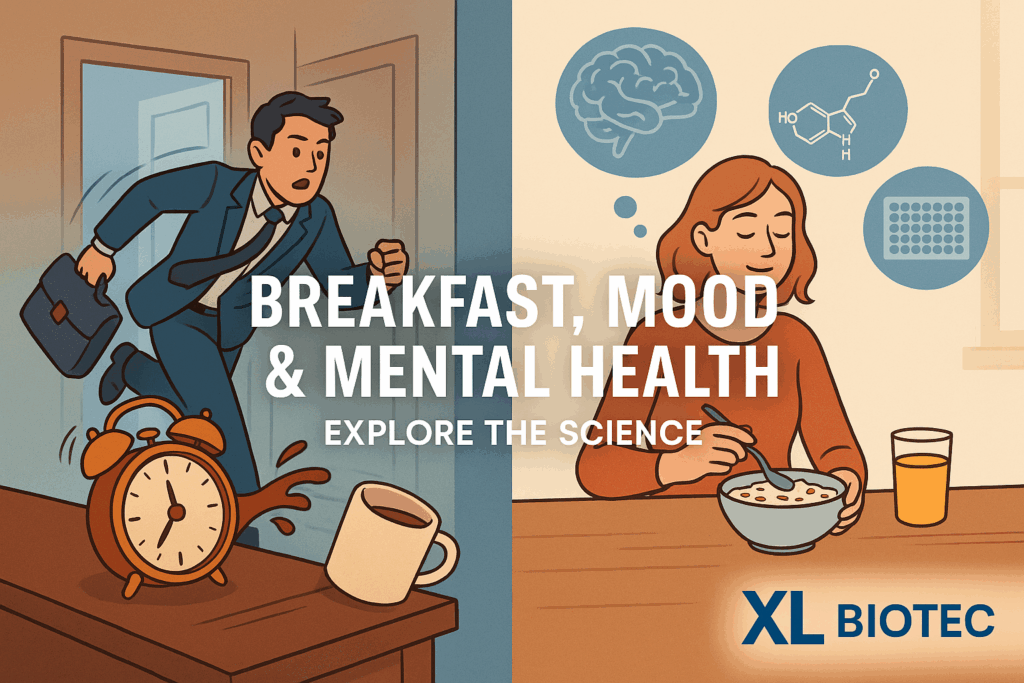
Mornings can be a total mess. We’ve all been there: the alarm clock rings, you hit the snooze button a few too many times, and suddenly you have to get dressed like crazy and head out the door. Most of the time, breakfast falls by the wayside. It just feels like you don’t have time. However, a new study shows that skipping your morning meal affects your mood more than you think. It seems that a little bite to eat when you wake up can have a pretty big impact on your mental health.
To find out, a large group of scientists got together and analyzed twelve different studies at once, and combined all the data to get a clearer picture. They ended up with data from over 400,000 people, which is a huge group, and makes the results pretty hard to ignore. They were looking for one thing: is there a link between skipping breakfast and depression? And yes, there actually is. The results were very clear. People who regularly skipped breakfast were much more likely to struggle with depression.
The researchers found that there are probably several reasons for this.
Firstly, your body runs on an internal clock, and this is set primarily by food. Think of it like a daily reset button. Breakfast tells your body, “Okay, the day is starting!” and gets all your systems going. If you don’t eat, this clock gets messed up. This can throw your hormones out of whack, such as your stress hormones, which has a direct impact on, you guessed it, your mood.
Also, you’ve probably heard about the gut-brain connection. This isn’t just hype. Your gut is home to trillions of tiny organisms, and the good bacteria in your gut help produce the chemicals your brain needs to feel good, such as serotonin (often referred to as the “happy chemical”). If you don’t feed them, they can’t do their job, and your mood can suffer. You are not only feeding yourself, but also the little helpers that keep your mind in balance.
And finally, taking a few minutes to eat is a great way to start your day. It’s a built-in moment of calm. So you can pause for a moment and take a deep breath before you have to worry about… well, everything else. It’s a small act of self-care that sets a positive tone before the chaos of emails, meetings, and deadlines take over.
No one is saying that a bowl of cereal can magically solve big problems. Depression is a complicated issue, that often requires professional support. But the point is, that you can make time for your breakfast and it can help you feel better. It’s a simple win. It’s a simple, practical step you can take to boost your overall well-being. So, if you can, try not to skip it. It’s a small thing that can make a big difference.
Tan et al. Association of skipping breakfast with depression: a systematic review and meta-analysis. Front. Psychiatry, 05 August 2025.
-Kindly crafted by Staff
