


Blog Post
Why Mondays Stress You Out — For Real
08
Aug
Aug
Feeling a little stressed on a Monday for no real reason? A new study suggests that you’re not just imagining it. Scientists have discovered something they call the “Anxious Monday” effect, and it looks like our bodies are basically programmed to freak out at the beginning of the week.
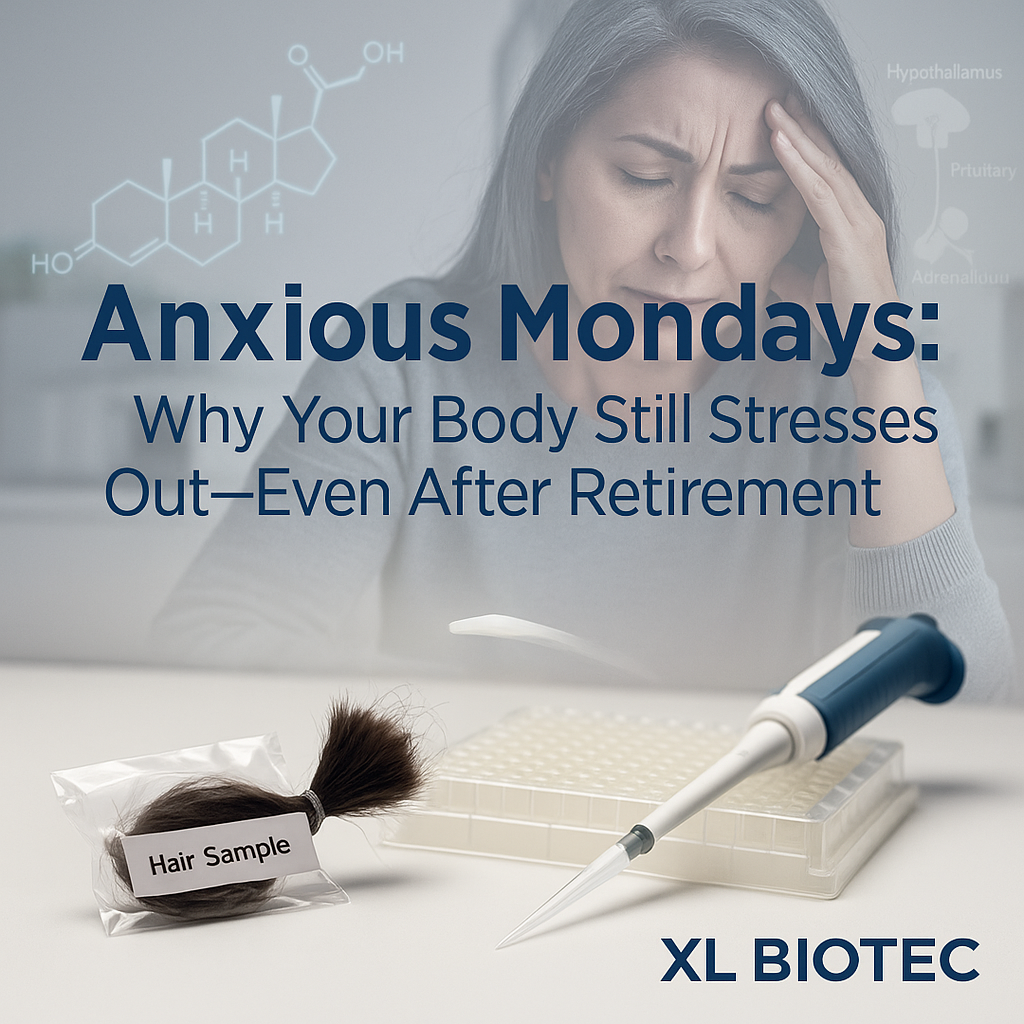
The researchers studied more than 3,500 older adults and found that people who felt anxious on Mondays had a 23% increase in stress hormones. This was not just a short-term phenomenon, but the researchers were able to detect these increased stress levels in hair samples, meaning that the effect lasted for up to two months! The increase was not just due to participants saying they felt more anxious. It seems that Monday itself triggers a particular stress response in our bodies.
Your body controls stress via the HPA axis. It consists of the hypothalmic, pituitary, and adrenal glands. The interplay between these three allows for the release of cortisol. Cortisol does not reduce or regulate stress directly. It affects many different systems in the body that help to return the body to a state of homeostasis. The nervous, cardiovascular, and endocrine systems are all impacted by cortisol.
There are many negative health-related risks associated with high cortisol. Weight gain and insulin resistance can lead to diabetes. Knock-on side effects of these could also include skin problems, digestive issues, and fertility problems. Blood pressure can be increased as well, which can lead to heart disease, kidney vessel issues, or problems with eyesight.
One of the unique aspects of this study is that researchers measured cortisol in hair samples rather than just in blood or saliva. This method captures stress levels over weeks and months rather than just a single moment, making it clear that the “Anxious Monday” effect is not fleeting — it lingers.
You might think that retirement is the ultimate cure for the Monday blues. But that’s not really the case. The study found that even people who no longer had a job still showed this physical stress response. It’s as if our bodies have a “memory” for the weekly work rhythm and just can’t shake that “yuck, it’s Monday” feeling. This constant stress upsets the body’s main stress control system (the HPA axis). Scientists suspect that this could be linked to a higher risk of heart problems. It even explains why more heart attacks occur at the beginning of the week.
The Monday blues could likely be caused by a sudden change in sleeping patterns. Going from a regimented sleep schedule during the week to a much later resting time and possibly more strenuous activities, an alarm going off at 6am on Monday morning can be a shock to the system.
There are various ways to reset the body’s stress rhythm, but the main methods are quite intuitive. Deep breathing will allow for a slower and more controlled heart rate. Regular exercise will release endorphins that brighten the mood. Also, exercises such as dancing or jogging might be done with friends which also increases the feelings of wellbeing. Additionally, adequate sleep is important and an inexpensive stress-managing tool.
Basically, our bodies could be on a 7-day schedule whether we like it or not. Even if you want to relax on Mondays, your body might not have caught on yet. The good news is that just knowing this fact can help. Finding ways to ease into the week and manage any leftover Monday stress is an easy way to take care of your heart, especially as you get older. Learning how to have a truly relaxed Monday could be the key to a healthier life.
Reference:
Tarani Chandola et al, Are anxious Mondays associated with HPA-axis dysregulation? A longitudinal study of older adults in England., Journal of Affective Disorders, (2025)
🧪 XL Biotec Product Spotlight: Tools for Stress Research
Cortisol ELISA Kit – ELK Biotechnology
Accurate cortisol measurement is key to understanding the body’s stress response. XL Biotec offers high-sensitivity ELISA kits for detecting cortisol in serum, plasma, saliva, and even hair extracts. Ideal for academic research, clinical studies, and sports science applications. Available from trusted suppliers like FineTest and ELK Biotechnology for reliable results.
Human ACTH (Adrenocorticotropic Hormone) ELISA Kit
The hypothalamic–pituitary–adrenal (HPA) axis is central to stress regulation. XL Biotec provides validated antibodies and sandwich ELISA kits for ACTH, enabling detailed analysis of stress-related pathways. Suitable for neuroendocrinology, behavioral neuroscience, and pharmacological studies targeting stress mechanisms.
For more information or to request a quote, contact XL Biotec’s technical sales team.
